
Tractor Buying Guides
What Size Tractor Do You Need for 5–20 Acres?
Affordable Tractors & Equipment
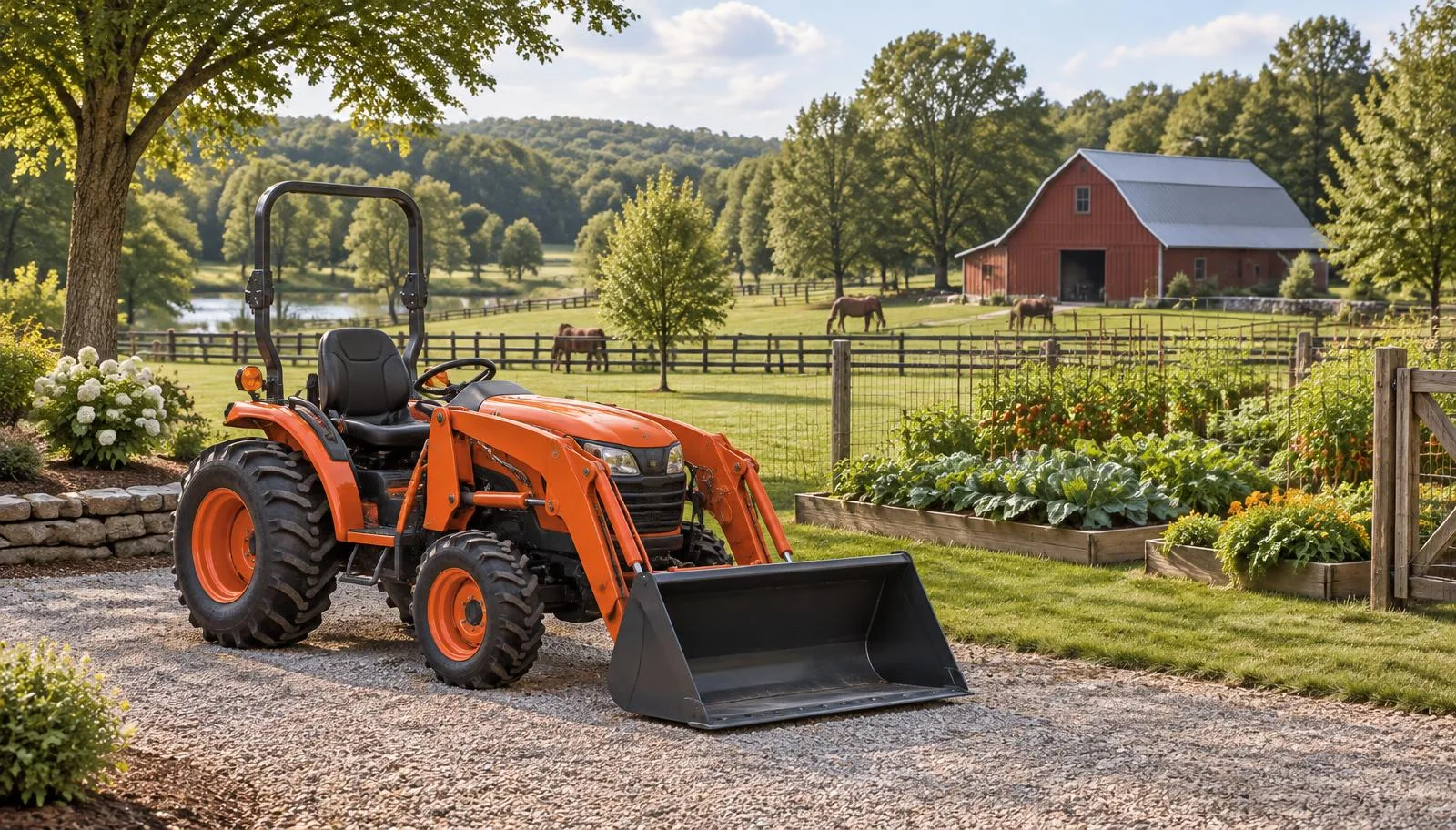
The right tractor size depends on your jobs, implements, lifting requirements and property access. Acreage is a useful starting point, but it does not determine horsepower or machine class by itself.
For five acres, start by comparing machines that fit your mowing and maintenance needs. For ten or twenty acres, also consider the area you actually work and the time available to complete each job. In every case, check the exact tractor and attachment combination before deciding.
Start with your most frequent job, your most demanding job and your narrowest access point. Then compare the compact and subcompact tractors against those requirements.
Start with the acres you actually maintain
A five-acre property with a garden, lawn and short driveway presents a different buying problem from five acres of pasture. A twenty-acre property may include woodland that never needs mowing.
Describe the working area rather than giving only the acreage on the deed. Cornell Small Farms recommends assessing the work and considering tractor weight, frame size and horsepower separately. Cornell’s tractor selection guidance
| Property size | What to establish before comparing tractors |
|---|---|
| 5 acres | How much is lawn, garden, pasture or woodland? What must fit through gates and around buildings? |
| 10 acres | Which jobs repeat most often? Do you already own implements the tractor must support? |
| 20 acres | How much land needs regular work? How quickly must each job be completed? Are you maintaining property or producing a crop? |
Use this table to organize your requirements. It is not a horsepower chart.
Match the tractor to the implement
If you already own a mower, tiller or other implement, record its exact model. If you are buying one, compare its documented requirements alongside the tractor.
Confirm:
- Required power and PTO speed, where applicable.
- Hitch or mounting arrangement.
- Hydraulic requirements, if applicable.
- Implement weight and the tractor’s applicable lift rating.
- Manufacturer restrictions on the equipment combination.
PTO means power take-off: the system that transfers power from the tractor to a compatible powered implement. Engine horsepower and PTO horsepower are separate specifications. Use the power rating specified by the implement manufacturer rather than substituting the tractor’s engine figure. John Deere manufacturer specifications
Ask the seller: “What documentation confirms that this tractor configuration supports the implement I intend to use?”
Compare loader capacity using the correct rating
For loader work, describe the material, expected load, attachment and lifting height. Ask which documented rating applies to that task.
Loader specifications can identify both the measurement point and height. For example, Kubota’s B26 brochure labels a lift capacity at maximum height at the pivot pin. Keep that measurement basis attached to the number when comparing equipment. Kubota B26 brochure
Have the tractor, loader and attachment documentation checked together, including applicable ballast and operating limits. A headline lifting figure alone is not enough to establish suitability.
Measure gates, storage and working access
Replace descriptions such as “a standard gate” with actual measurements.
| Information to collect | What to record |
|---|---|
| Narrowest gate | Clear opening width and nearby obstructions |
| Storage entrance | Clear width and height |
| Working route | Tight turns, overhead obstacles and restricted spaces |
| Typical job area | Surface conditions and terrain to discuss |
| Equipment package | Tractor and the attachments you intend to use |
Request dimensions for the actual configuration. Resolve missing measurements and operating questions before treating a candidate as suitable for the property.
Do not assume extra horsepower solves an access problem. The machine still needs to fit the places where it will work and be stored.
Consider how long each job can take
Tell the seller whether mowing is a weekly evening task or an occasional full-day job. This gives your equipment comparison a practical time requirement.
Working width, travel speed and field efficiency affect estimated coverage. Iowa State provides a field-capacity planning tool for examining these relationships. Any estimate should state its assumptions rather than promise a completion time. Iowa State field-capacity planning tool
A useful buying question is: “What equipment combination should I compare for this maintained area and schedule?”
Compare two ten-acre buying situations
These examples are hypothetical.
Buyer A mainly maintains lawn, a garden and a driveway. The inquiry should describe access restrictions, the desired mowing setup, storage space and recurring maintenance jobs.
Buyer B mainly maintains pasture and already owns an implement. The inquiry should include that implement’s model, its requirements, the maintained area and the time available.
Both buyers own ten acres, but they have different requirements. Their shortlists may be different even before price enters the comparison.
Use this tractor-sizing worksheet
Complete this brief before asking about a machine:
| Buying question | Your answer |
|---|---|
| Total property size | |
| Area regularly maintained | |
| Most frequent job | |
| Most demanding recurring job | |
| Existing implement models | |
| Loader tasks, if needed | |
| Gate and storage measurements | |
| Time available for regular work | |
| Purchase budget | |
| Delivery destination |
Separate recurring work from a one-time project. Ask whether an occasional specialist job needs to determine the tractor you buy for everyday use.
With this information ready, browse tractors for sale and compare the exact equipment packages that could meet your needs.
Frequently asked questions
What size tractor do I need for five acres?
Begin with the maintained area, main jobs, access measurements and implement requirements. A subcompact or compact tractor can belong on the comparison list, but five acres alone does not establish which model is suitable.
What size tractor do I need for ten acres?
Identify the work that sets the requirement: mowing, material handling, implement use or another recurring task. Then compare documented capability, dimensions and the time available. Two ten-acre properties may need different equipment.
Do I need a utility tractor for twenty acres?
Not necessarily. Twenty acres of mixed property is different from twenty acres of regularly worked ground. Define the jobs and equipment requirements before selecting a tractor class.
How much horsepower do I need?
Use the requirements of your intended implements and tasks. Check whether a quoted requirement refers to engine power or PTO power. Also compare dimensions, weight and applicable lift ratings; horsepower does not describe every capability.
Should I buy extra horsepower for future work?
List the future jobs you realistically expect and the implements involved. Compare those requirements and the extra costs before paying for capability you may not use.
Find a tractor that fits your work
Send Affordable Tractors & Equipment your acreage, maintained area, main jobs, existing implements, access measurements and budget. Include a listing link or stock number if you already have a candidate.
Considering a pre-owned machine? Use our used tractor buying checklist to organize records, condition questions and written purchase details.
Request a tractor quote with those details to begin comparing equipment for your work.