
Tractor Buying Guides
Used Tractor Buying Checklist: What to Ask Before You Buy
Affordable Tractors & Equipment
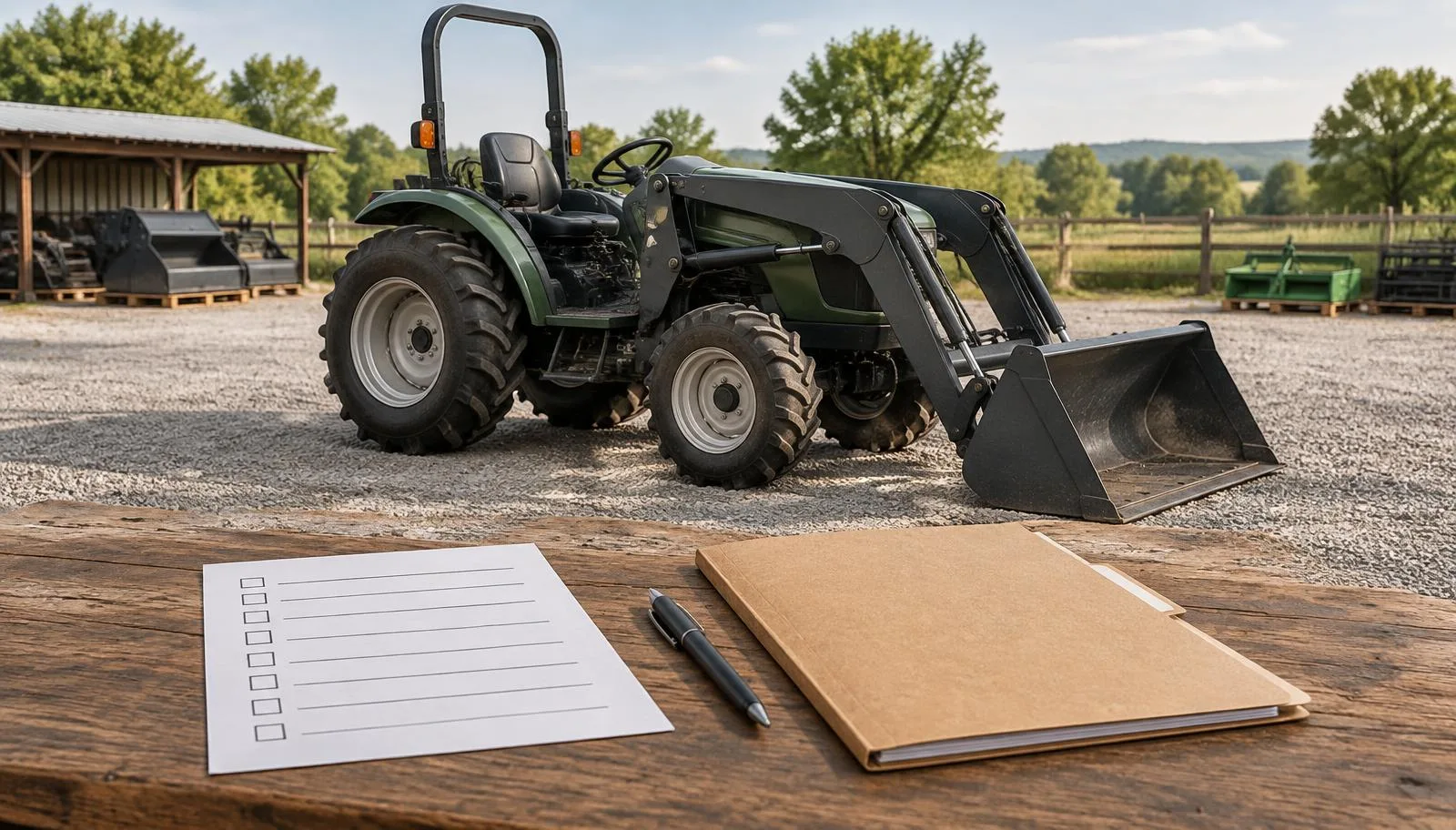
Before buying a used tractor, confirm the exact machine, request available service records, clarify its known condition and establish which attachments and written terms are included. Arrange a qualified assessment when mechanical or safety questions remain.
Keep unresolved questions visible. A photograph, an hour reading and a service record answer different questions; none should stand in for the others.
When comparing tractors for sale, organize your notes by listing link or stock number. This makes it easier to compare complete offers rather than asking prices alone.
1. Write down the work the tractor must do
Start with a short buying brief:
- Main jobs and how often they occur.
- Area regularly maintained, where relevant.
- Existing implements and their model numbers.
- Access and storage measurements.
- Loader tasks, if needed.
- Budget and delivery destination.
If you are still defining the equipment package, use our tractor sizing guide for 5–20 acres to organize the work and access requirements.
AgDirect’s buying guidance highlights task fit, maintenance history, known issues and included attachments as useful purchase considerations. AgDirect’s used tractor buying guide
2. Confirm which machine is being offered
Ask for the full model designation, stock number, serial identification and current photographs. If the listed year matters to your comparison, clarify what record supports it and whether it describes manufacture or model year.
Keep the same identification in the listing, correspondence and quotation. If anything differs, resolve it before proceeding.
Request a clear account of who is selling the tractor and what documents support their authority to sell it. An identification-plate photograph helps identify a machine; it does not establish ownership by itself.
For a remote purchase, request dated views of:
- The tractor from multiple sides.
- Identification and hour displays.
- The operator’s station.
- Included attachments.
- Disclosed damage, wear or repairs.
Ask for additional views when something important is unclear.
3. Request the history behind the displayed hours
Record the displayed hours and request available service and repair records. Ask whether the seller knows of a replaced, inaccurate or nonworking meter.
Keep these entries separate:
| Evidence | What it helps establish | What may remain unresolved |
|---|---|---|
| Hour-display photograph | What the display showed when photographed | Whether it represents total operating history |
| Service records | Work documented on particular dates | Periods or repairs not covered by those records |
| Seller’s account | Reported previous use and known history | Details without supporting documentation |
| Qualified assessment | Findings within the stated assessment scope | Conditions or components outside that scope |
Do not mark a maintenance-history question answered simply because an hour photograph has arrived. If records are unavailable, write “not supplied” rather than assuming a history.
For a deeper comparison, read how to evaluate used tractor hours.
4. Ask about the manual and safety equipment
Obtain the correct operator’s manual and have the machine’s safety configuration assessed for its intended use.
Wisconsin Extension identifies manuals, rollover protection, restraints, guards, shields and controls as important used-equipment purchase considerations. Wisconsin Extension’s safety guidance
If equipment is absent, damaged or modified, ask a qualified professional what is required before treating the tractor as ready for your work. Do not improvise repairs or operating tests to fill gaps in a listing.
5. Clarify condition and known faults
Ask the seller to describe known faults, recent repairs, warning messages, leaks and functions that do not work as intended.
If an inspection is claimed, request its date, machine identification, scope and findings. Distinguish an inspection report from a general statement that a machine “runs well.”
Use this question list when discussing an assessment with a qualified agricultural equipment technician:
| Area | Question to resolve |
|---|---|
| Engine | What condition findings and repair information are available? |
| Transmission and drive system | Are faults, repairs or operating limitations disclosed? |
| Hydraulics and loader | What leaks, damage, repairs or performance concerns need assessment? |
| Steering and brakes | What has been checked, and what remains unresolved? |
| Tires and wheels | What condition or replacement needs affect the purchase? |
| Structure and attachments | Are damage, modifications or repairs documented? |
These are assessment questions, not instructions for operating tests.
For a distant machine, ask whether an assessment can be arranged before purchase and what access is available. AgDirect also discusses using a qualified equipment professional when direct assessment by the buyer is difficult. Remote buying considerations
6. Itemize what is included
Request a written list of the tractor, loader, bucket, implements, mounting parts and accessories included in the quoted price.
Ask whether anything pictured is excluded. Identify attachments by model where possible.
If you plan to use an existing implement, have compatibility checked against applicable manufacturer documentation. An attachment being included in a sale is a separate question from whether it suits your intended work.
7. Compare the complete purchase
Build your own comparison using the same headings for each candidate:
| Purchase item | What to clarify |
|---|---|
| Equipment | Exact machine and included items |
| Disclosed condition | Known faults and available assessment findings |
| Agreed work | Any work to be completed before handover |
| Additional equipment | Items you need but are not included |
| Delivery | Destination, arrangements and quoted inclusions |
| Written terms | Payment, warranty, return and cancellation provisions applicable to the transaction |
Use the quotation’s stated currency when comparing international offers. Ask for any unclear inclusions or charges to be explained in writing.
An overseas destination does not establish what a particular delivery quote includes. Request written destination-specific details rather than assuming transport, documentation or other arrangements.
8. Keep a request-and-evidence worksheet
Copy this table into your buying notes:
| Question | Evidence received | Still to confirm |
|---|---|---|
| Is this the exact tractor described in the quotation? | ||
| Is the seller’s identity and authority to sell clear? | ||
| What supports the reported operating history? | ||
| Which faults and repairs are disclosed? | ||
| What qualified assessment has been completed? | ||
| Are the manual and safety equipment accounted for? | ||
| Which attachments and mounting parts are included? | ||
| Does the proposed package meet my job requirements? | ||
| Are price, delivery and applicable terms clear? |
Example: you receive an hour-display photograph and a quotation, but no service records. Record the display reading and quoted details as received. Leave service history unresolved. This prevents one document from appearing to answer every buying question.
Frequently asked questions
What should I check first when buying a used tractor?
Start with machine identity, job suitability, known condition, available records, included equipment and written terms. Use the same questions for each candidate so the comparison stays consistent.
How do I know whether the tractor’s hours are genuine?
Ask what evidence supports the displayed reading, including available records and any known meter replacement. If total history cannot be established, keep that uncertainty explicit.
Can I consider a tractor without service records?
You can assess the offer, but missing records remain a gap. Discuss what a qualified assessment can establish before deciding whether the remaining uncertainty is acceptable.
Does a video replace an inspection?
A video documents what it shows. It does not establish the condition of components outside its view or replace the scope of a qualified assessment of the actual machine.
Are the attachments in the photographs included?
Only the written sale description can clarify that. Ask for an itemized list and identify any pictured exclusions before relying on them in your comparison.
What should an international buyer include in an inquiry?
Provide the listing link or stock number, intended work, existing implements and destination country and locality. Use the approved quote channel for private delivery and contact details.
Ask about a tractor you are considering
Send Affordable Tractors & Equipment the listing link or stock number, your main jobs, any existing implements, your destination and the questions still open in your checklist.
Request equipment details and a written quote to clarify the proposed purchase.